





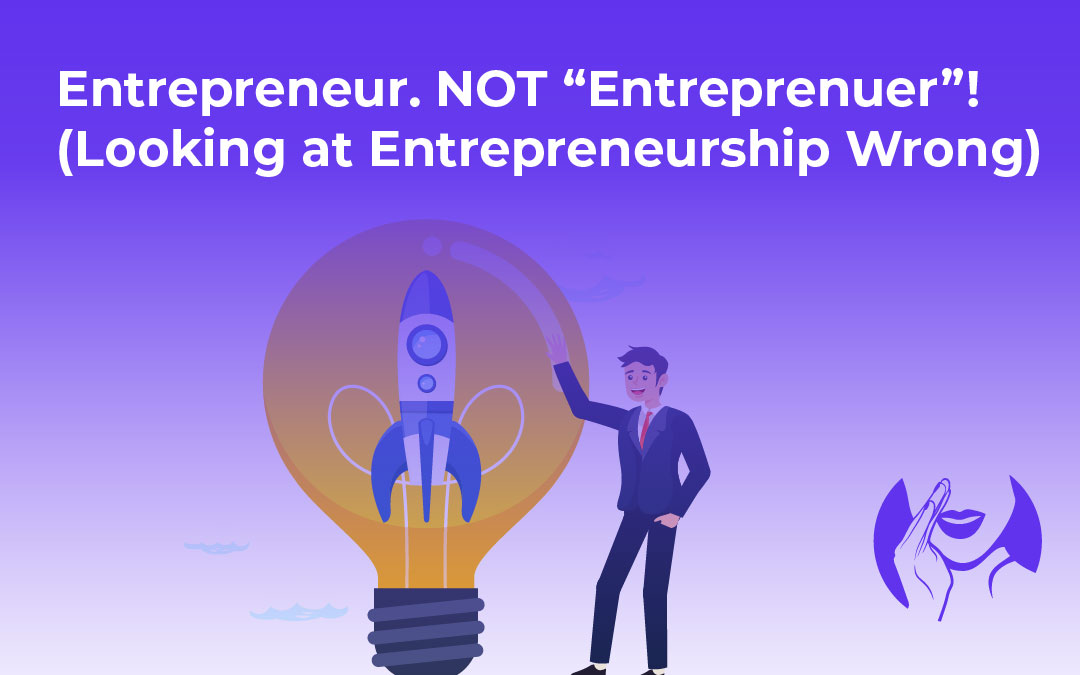
You probably had to stare at the word entreprenuers twice just now, right?
You are not alone. I still have to slow down at “entrepreneur” because the vowels feel like a typing test someone made too hard on purpose.
But that tiny spelling slip says something bigger. A lot of people feel just as shaky about what an entrepreneur really is as they do about spelling the word in the first place.
Is an entrepreneur only the billionaire founder with a rocket company? The kid on TikTok selling digital templates? The local baker who left a safe job to open a shop on the corner?
This is where things get twisted. We spell the word wrong and many of us picture it wrong, too.
Today, we want to flip that. We will use the messy spelling as a doorway into what being an entrepreneur really means for you, your money, your work, and your community.

Table Of Contents:
- Why We Trip Over The Word “Entrepreneur”
- What People Get Wrong About Entreprenuers
- So What Is An Entrepreneur, Really
- The Many Type s Of Entrepreneurs You Never Hear About
- The Money Side: Why Capital Feels So Hard To Get
- Entreprenuers As Job Creators And Community Builders
- The Emotional Side: What This Life Really Feels Like
- How To Become An Entrepreneur, Step By Step
- Conclusion
Why We Trip Over The Word “Entrepreneur”
The word comes from French roots that basically mean “to undertake.”
So an entrepreneur is a person who undertakes something risky and meaningful. Someone who starts. Someone who tries.
That is a much bigger and more human picture than the usual startup buzz.
Modern definitions say entrepreneurs spot gaps, take financial risk, and build something that creates value and profit. You will see that idea echoed in places like Investopedia’s overview of what an entrepreneur is and how to get started at their entrepreneur guide.
But if we zoom in, it looks much more real and far less glamorous.
What People Get Wrong About Entreprenuers
You have probably absorbed a few myths just by scrolling headlines and watching startup movies.
So let us untangle a handful of them before they quietly block you from doing the work you are called to do.
Myth 1: Entrepreneurs Are Lone Geniuses

The classic story is simple. One brilliant person, one game changing idea, instant success.
Real life is closer to this: one stubborn person, a bunch of messy half ideas, lots of feedback, a long road, and many hands helping!
Research on entrepreneurship education, like the work out of WU Vienna that breaks down these ten big myths, points out that successful founders rely on teams and constant learning. It is rarely a solo hero show.
So if you picture entreprenuers as isolated superheroes, that picture is already wrong.
Myth 2: You Need A World-Shaking Idea First
The second myth is sneaky. It whispers, “You are not ready because your idea is not big enough.”
But as professors and startup programs keep showing, the first idea usually gets reshaped over and over as founders talk to customers, partners, and mentors. What matters most is the skill of finding and refining opportunities, not the one perfect lightning bolt at the start.
That should feel like a relief. You are allowed to start small and adjust.
Myth 3: It Is All Glamour And Freedom
The truth looks different. Long hours, constant problem solving, and emotional swings that make a roller coaster look flat. Studies like the small business owner survey from Guidant Financial show just how intense the journey feels for real owners.
Yet there is another side. Founders often report deeper life satisfaction because they are creating something that matters to them and making their own decisions.
Myth 4: Entrepreneurs Only Care About Money
Yes, revenue matters. Without it, your dream turns back into a hobby.
But if money were the only fuel, you would not see such strong growth in social entrepreneurship and impact driven funds.
Look at Allison Kelly’s work at the impact group ICA. Under her leadership, they tripled net assets, increased investments, and created products like the ICA Impact Note, which bakes in goals such as good jobs, fair pay, and employee wealth building. That is entrepreneurship focused on people as much as profit.
So What Is An Entrepreneur, Really?
Strip away the buzzwords and an entrepreneur is someone who sees a gap and chooses to do something about it.
They take a financial risk and a reputation risk, and they learn fast in public.
They can be running a startup, a neighborhood shop, an online store, or even leading change inside a company.
Key traits you actually need
Here are traits that matter far more than spelling or flashy branding.
- Curiosity about problems people face.
- Willingness to make decisions without perfect data.
- Ability to take feedback and adjust without shutting down.
- Basic comfort with risk and uncertainty.
- Clear communication with customers, team, and partners.
You will also need some grit, because this journey asks you to keep going after “no” shows up a lot.
The skills you build on top
On top of that mindset, strong entreprenuers stack practical skills like these.
- Market research and spotting demand.
- Simple financial planning and cash flow tracking.
- Sales and storytelling.
- Hiring, leading, and letting people go when you must.
- Planning at a high level while still getting the daily work done.
You do not have to be perfect at any of these from day one.
You just have to be ready to learn, and ready to admit when you need help.
The Many Types Of Entrepreneurs You Never Hear About

Part of why the word feels heavy is that we see only one mold held up as real.
But research on different kinds of entrepreneurship from groups like PFH Private Hochschule and Moneypenny shows a broad range of types, each driven by different goals.
| Type | What Drives Them | Real Life Flavor |
|---|---|---|
| Innovator | New ideas, fresh products, new markets | Someone like Melanie Perkins building Canva |
| Hustler | Hard work, selling, closing deals | The founder running three side businesses at once |
| Imitator | Improving on what already works | Local version of a concept that proved itself elsewhere |
| Social | Solving social or environmental problems | Impact funds and mission driven lenders |
Many of us move between types over a career.
You might start as a hustler freelancer, become an innovator when you see a gap in tools, then grow into a social entrepreneur who bakes impact into your model.
The Money Side: Why Capital Feels So Hard To Get
This is where most entreprenuers quietly hit a wall.
You can have the mindset and the skills, but if you cannot fund the idea, things stall fast.
The tough news is this. New research on access to capital shows how tilted the playing field still is.
The Ewing Marion Kauffman Foundation found that at least 83 percent of new hiring businesses do not access private institutional capital when they launch, and around 64.4 percent of startup capital comes from the owner and their family savings. You can read the details in their report “Access to Capital for Entrepreneurs” at Kauffman’s access to capital study.
Then you add this. The Federal Reserve’s 2021 Small Business Credit Survey reported that only 37 percent of loan applicants received all the financing they sought in 2020. That was a steep drop from 51 percent the year before, and you can see the full numbers in the survey at the 2021 Small Business Credit Survey.
No wonder a leading concern for aspiring founders in Kauffman’s study “Challenges Along The Entrepreneurial Journey” was difficulty acquiring funds. That report is worth your time at Kauffman’s challenges report.
How entreprenuers are finding new funding paths
The good news is that creative funding channels are expanding fast.
On one side, you have debt and impact products aimed at founders shut out of old systems. For example, The Wisdom Fund, now led by CNote’s Wisdom Fund initiative, was created to match the real borrowing needs of women of color who run businesses. It gives investors a fixed income product while pushing more capital to these owners.
On the equity and lending side, nonprofit lenders and CDFIs such as CDC Small Business Finance, Pacific Community Ventures, and farm focused groups like California FarmLink are giving training, advice, and flexible capital so small companies are not left on their own.
Platforms like crowdfunding explained on Investopedia show another route. Campaign tools such as Kickstarter’s model and Indiegogo’s platform let entreprenuers pre sell ideas and tap their own communities rather than wait on a gatekeeper.
Entreprenuers As Job Creators And Community Builders
If you have ever felt guilty for wanting to build wealth through a business, sit with this for a moment.

Small businesses are the backbone of hiring across the United States.
The US Small Business Administration’s profiles show that small firms account for about 65 percent of new jobs in the country. You can look through your own state’s data in the SBA small business profile report.
At the same time, Bureau of Labor Statistics data show that around 70 percent of small firms fail within ten years, as noted in the BLS tables you can review at their business age table.
Put those together. Entrepreneurs carry the load on job creation and face the bulk of the risk.
This is part of why states like California support their founders with a formal Office of the Small Business Advocate. You can see how serious that support is by skimming their economic facts about small firms at CA Small Business Facts.
How to plug into support where you live
If you are in California, there is a simple move you can make this week.
Get to know the CalOSBA structure and who is fighting for small business inside government. Start by meeting the CalOSBA leadership team so you understand their role and how they think about support.
Then find your regional representative so you are not building alone. CalOSBA has a simple directory where you can find a CalOSBA contact near you for your part of the state.
If you host events or run founder groups, you can even invite them to share resources through the CalOSBA speaker request form.
They also share regular updates, webinars, and detailed performance data, which helps you see what is changing and where programs are working. To track that, check out their events and webinars page, read their performance reports, and stay on top of CalOSBA news and publications.
The Emotional Side: What This Life Really Feels Like
Enough data for a second. Let us talk about your nervous system.
Becoming an entrepreneur means saying yes to a path that is intense, meaningful, and sometimes lonely.
You might find yourself juggling credit cards like Kevin Plank did early in the Under Armour journey, as covered in his story on Fundable and the US Chamber’s profile of founders who started small.
You might be the first person in your family to leave a steady paycheck for something less predictable. You might have kids, parents, or a partner depending on you.
It is no wonder so many people search “entreprenuers” in a hurry and then close the tab. The whole idea can feel heavy before you even write your first business plan.
How to know if this path is actually for you
Here are a few questions worth sitting with. Do you notice problems everywhere and catch yourself thinking of fixes? Can you keep going when you feel scared and still make clear decisions? Does the idea of building something that outlasts your current role make your chest feel a little lighter? Are you ready to have people question your choices and keep going anyway?
If most of those landed with you, it might be time to take this seriously.
How To Become An Entrepreneur, Step By Step
You do not need to quit your job tomorrow or raise a seed round next week.
You can walk into this through a simple, practical path.
Step 1: Study the word, then study yourself

Start by grounding yourself in a clear picture of the role.
Resources like Prospects’ guide to entrepreneurial skills at what is an entrepreneur and what skills do they need can help you map where you stand now.
Then grab a notebook and answer two honest questions. What problem or gap do I care enough about to work on for years? What strengths and skills do I bring that could actually help here?
There is your starting point.
Step 2: Research your idea instead of romanticizing it
This is where would be entreprenuers drift into daydream mode.
Instead, talk to people who match your target audience. Ask about their struggles. Watch what they pay for today.
Look at trends in your industry with tools like small business trend surveys from groups such as Guidant Financial’s small business trends survey. Notice which sectors are growing and which models are working in the current climate.
Step 3: Choose a path that matches your risk level
You do not have to jump straight into a full time startup.
Some people start with a side hustle while they keep their main job. Others join an early stage company as a founding team member to learn on the job.
Guides that walk through different entrepreneurial types, like the article on types of entrepreneurship from Moneypenny, can give you ideas on paths that feel less extreme but still real.
Step 4: Plan lean and respect the numbers
Your business plan does not need to be a hundred pages long.
It does need clear numbers. What will you sell, for how much, and how many sales will you need each month to cover costs and pay yourself something?
Given how few founders get all the capital they want from banks, as the Fed survey shows, it helps to build a lean plan. One where you can start small, use personal savings carefully, and test demand before you double down.
Step 5: Build your support circle
Entreprenuers who make it tend to build wide networks of mentors, peers, lenders, and early partners.
You can watch talks, follow founders on channels like the Side Hustle Ideas episodes on YouTube, and study success stories covered in sources like the greatest entrepreneurs list at Investopedia.
But more important is who knows your name locally.
Look for regional groups and networks like CAMEO’s network of micro business programs, impact hubs like Caravanserai Project, or employment focused funds such as REDF’s venture philanthropy.
People there see dozens of founders every year and can help you skip the mistakes they watch again and again.

Conclusion
The truth is, almost everyone spells entreprenuers wrong the first few times, and almost everyone misunderstands them too.
We imagine flawless geniuses with giant funding rounds. What we actually have are human beings who are willing to notice problems, accept risk, lean on community, and keep learning as they go.
You do not need to fit a narrow mold to join them.
You might become the quiet founder who builds a steady local company that feeds families with good jobs. You might grow into the impact focused entrepreneur who shapes capital the way Allison Kelly has done through ICA’s work with impact notes and beyond.
Or you might start with a tiny experiment on the side and see where it leads.
The spelling will come with practice. So will the skills. What matters is that you stop holding entreprenuers at arm’s length like some strange separate group and start asking the real question.
What would change if you allowed yourself to be one of them?